







Home Hemodialysis Customer Support: 866-697-8243
Peritoneal Dialysis Customer Support: 800-323-5188
Talk to a Patient Consultant About Home Dialysis: 888-200-6456
Home Hemodialysis Customer Support: 866-697-8243
Peritoneal Dialysis Customer Support: 800-323-5188
Talk to a Patient Consultant About Home Dialysis: 888-200-6456
Dialysis During a Natural Disaster
Emergency Planning Can Help Save Time and Confusion During a Crisis
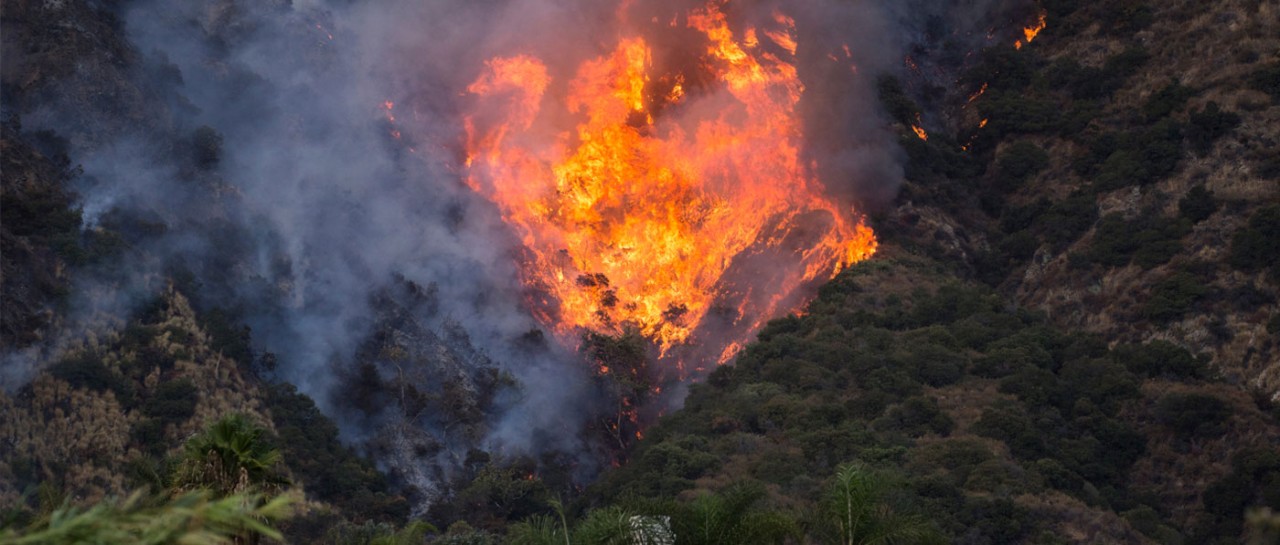
It was midnight when Martine and her family were awakened by an urgent-sounding knock on the door. Standing in the entry to their mountain home in Boulder Creek, California, was the sheriff, and the news wasn’t good. The CZU Lightning Complex wildfire, which could be seen from Martine’s deck that night in August of 2020, was getting close – too close. The family had fifteen minutes to round up their things and evacuate.
Getting to Safety
“My first thought was to gather the kids and make sure they had everything they needed, as well as any important papers,” says Martine. Minutes later, the four family members were in the car, leaving their house to an unknown fate.
Fortunately, Martine has a friend in San Jose she “can call on anytime.” She, her husband, and their two daughters stayed there until it was safe to go home. Though they were able to return to Boulder Creek after two and a half weeks, it was a month before the fires were fully contained. More than 7,500 buildings in the region were destroyed and one person died.
“Everybody I know knows somebody else who lost or had damage to their property,” says Martine. “We didn’t know if our house was standing until weeks after evacuation.”
Back-Up Plans and Lessons Learned
Though the fire didn’t damage their residence (beyond leaving a layer of dust and ash), when the family returned it was to a home without power or drinkable water. A generator was purchased to supply electricity to her NxStage dialysis cycler until power was restored, but their tap water – which Martine typically uses to make dialysate via her PureFlow SL Water and Dialysate Preparation System – was contaminated.
Fortunately, Martine uses a NxStage System One, one of the only home hemodialysis machine cleared in the US that can use pre-mixed bagged dialysate – ideal for her situation.
“We used the bagged dialysate for a whole month. I was very thankful, it was a nice back-up system.”
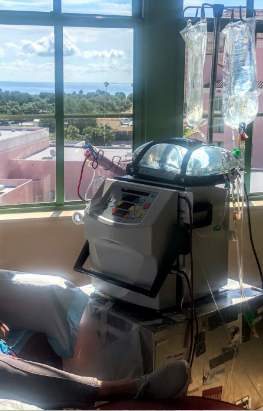
Looking back, Martine knows she made the most of a bad situation. And after she returned home, the generator, System One cycler, and bagged dialysate all enabled her to continue therapy uninterrupted. But she also admits there are some things she will do differently going forward.
Given her rural location, Martine is now keeping a one-month supply of pre-mixed dialysate bags on hand. She says she is also better prepared to take her NxStage System One with her, should disaster strike again. NxStage systems are the only home hemodialysis machines weighing less than 85 pounds making them the most portable HHD cyclers during an emergency or natural disaster.
“I have a to-go kit ready, and I moved the (dialysate) bags up to a more accessible area at the house,” she says. “I’m prepared now.”
Beyond the usual supplies required for HHD, one piece of equipment Martine advises HHD patients to keep in their to-go kit is a power strip, since outlets at hotels (and even private residences) can be difficult to access.
In Case of Emergency
In 2020, according to the National Oceanic and Atmospheric Administration (NOAA), wildfires, drought, tornadoes, hurricanes, floods, and other weather events caused more than $95 billion in damages throughout the U.S.1 Beyond the financial costs, natural disasters and other emergency events (power outages, water main breaks, etc.) cause injuries, deaths, displacement of people from their homes, and medical issues, including limiting/preventing access to dialysis care and therapy.
Bunny Talton, a certified nephrology nurse from Dallas, TX advises her home dialysis patients to have a plan and the supplies to get them through these types of situations.
“In our area we require patients to have a supply of bagged dialysate on hand for any type of equipment failures or any emergencies that might arise,” she says. “We also give our patients a travel and emergency supply list that they should have easy access to.”
Emergency readiness is part of her team’s HHD training protocol, says Bunny, and about every six months she or one of her fellow nurses reaches out to make sure patients are staying prepared.
“We encourage them to check their stock levels and the expiration dates (for supplies),” Bunny says. “And the big part of our education that patients need to know and understand is their water source, so if there is an issue or a notice sent out that they know they can call the utility company or their clinic for more information.”
Published May 2021
Home hemodialysis with NxStage systems involves risks, and you may not experience the potential benefits of such therapy. NxStage systems require a prescription for use. If your doctor prescribes more frequent therapy, your vascular access is exposed to more frequent use which may lead to access related complications, including infection of the site. Patient Advocates are compensated for their time.
References:
- Adam B. Smith, “2020 U.S. billion-dollar weather and climate disasters in historical context,” Climate.gov, January 8, 2021, https://www.climate.gov/news-features/blogs/beyond-data/2020-us-billion-dollar-weather-and-climate-disasters-historical.
APM4151 Rev. B